
Hire purchase car finance — own the car at the end
- FCA regulated
- No obligation
- Free to check
- Typical term24 – 60 months
- Typical deposit£0 – 10% (optional)
- Who it suitsKeep the car long-term
- Decision speedSoft check in ~60 seconds
Is this right for you?
- You want to own the car outright at the end of the agreement.
- You drive high mileage and don't want a per-year limit.
- You prefer a fixed monthly payment for the whole term.
- You want to keep modifying, wrapping or repairing the car freely.
- You want the lowest possible monthly payment — PCP is usually cheaper each month.
- You change car every 2 – 3 years and don't want to worry about resale.
- You'd rather hand the keys back at the end with nothing more to pay.
How hire purchase works
You put down an optional deposit, then repay the rest of the car's price plus interest in equal monthly instalments over a fixed term. During the term the finance company technically owns the car — you own it outright once the final payment clears. Because you are paying off the whole car, monthly payments are higher than (A car finance product with lower monthly payments and a large optional final payment (the balloon) if you want to keep the car.) or leasing, but you have something to sell or keep at the end.
- Choose your term (24 – 60 months) and optional deposit.
- We soft-search across our lender panel and show the offers you're likely to be accepted for.
- Pick your car, we complete the agreement with the lender, and you drive away — you own the car after the final payment.
HP vs PCP vs leasing
| Hire purchase | PCP | Leasing | |
|---|---|---|---|
| Own the car? | Yes, at the end | Optional final payment to own | No — hand back |
| Monthly cost | Higher | Lower | Lowest |
| Mileage limit | None | Yes (typical 8k – 15k / year) | Yes (typical 8k – 15k / year) |
| Modifications | Allowed | Usually not | Not allowed |
| End of term | It's yours | Keep / hand back / part-ex | Hand back |
What our lender panel actually looks for
Different lenders on our panel weight things differently — this is the honest short version of what materially moves an (A car finance product where you pay a fixed monthly amount and own the car outright at the end of the term.) decision. Where a specific criterion depends on your circumstances, our team will tell you before you formally apply.
- Affordability: monthly net income minus committed outgoings, versus the requested payment. Most lenders want the finance payment to be no more than 25 – 30% of net income after other debts.
- Credit history over the last 12 – 24 months matters far more than older events — recent missed payments hurt more than an old CCJ that's been satisfied.
- Time at current address, employment stability, and being on the electoral roll all lift the acceptance likelihood.
- Vehicle age and mileage: most panel lenders will finance up to 10 years old and 100,000 miles — a few will go older or higher for the right customer.
- HP is offered across the panel — each lender weights affordability, credit history and vehicle age slightly differently. The broker will match your circumstances to the lender most likely to accept before any hard search.
Voluntary termination and settling early
Under the Consumer Credit Act 1974, once you have paid 50% of the total amount payable on an HP agreement you have the legal right to Voluntary Terminate ( (A legal right under the Consumer Credit Act to hand back a finance car once you've paid at least 50% of the total amount payable.)) — hand the car back with nothing more to pay, provided it's in reasonable condition. Settling early at any point is also allowed — the lender is required to give you a settlement figure with a statutory rebate on future interest.
Deposit, term and total cost
- 24 months712 £/mo
- 36 months502 £/mo
- 48 months398 £/mo
- 60 months336 £/mo
Illustrative example
| Cash price | Deposit | Monthly | Total payable |
|---|---|---|---|
| £8,000 | £0 | £214 | £10,272 |
| £15,000 | £500 | £389 | £19,172 |
| £25,000 | £2,000 | £615 | £31,520 |
Common reasons applications are turned down
In short
Hire purchase spreads the full price of a car over fixed monthly payments. You own the car outright once the final payment and any option-to-purchase fee clear. There is no mileage limit and no condition inspection at the end, but monthly payments are higher than PCP on the same car and term.
- Ownership
- Yours at the end of the term
- Mileage limit
- None
- Typical term
- 24 to 60 months
- Deposit
- Optional — larger deposit, lower payments
- Early exit
- Settlement figure, or voluntary termination after 50%
How does hire purchase actually work?
Hire purchase is the simplest form of car finance to understand. A lender buys the car and hires it to you across an agreed term. Every payment chips away at the balance and the interest on it. When the last payment clears — along with a small option-to-purchase fee that most agreements carry — legal ownership transfers to you. Nothing is deferred, nothing is left to settle, and there is no final decision to make.
That structure is why HP payments look higher than PCP on the same car. With HP you are paying down 100% of the value. With PCP you are only paying down the part of the value the lender expects you to use, and deferring the rest into a balloon. Neither is cheaper by nature; they simply distribute the same underlying cost differently over time.
| Term | What it means | Why it matters |
|---|---|---|
| Cash price | The agreed price of the car | Everything else is calculated from this |
| Deposit | Cash or part-exchange paid up front | Reduces the amount financed and the interest paid |
| Amount of credit | Cash price minus deposit | This is the figure interest is charged on |
| APR | The yearly cost of the credit including fees | The comparable number between lenders |
| Total amount payable | Deposit plus every payment plus fees | The only honest measure of what the car costs you |
| Option-to-purchase fee | Small final admin fee | Usually under £200; transfers ownership |
Who is hire purchase best for?
HP suits people who keep cars. If your habit is to buy something, run it for six or seven years and only change when it starts costing money, HP is almost always the right structure — you finish the term with an asset instead of a decision. It also suits high-mileage drivers, because there is no mileage cap and no end-of-term condition inspection to worry about. Delivery drivers, commuters covering motorway miles and anyone towing regularly generally end up better off on HP.
- You want to own the car outright with no balloon payment waiting at the end
- Your annual mileage is high or genuinely unpredictable
- The car will pick up honest wear — kids, dogs, tools, trade use
- You want the simplest possible agreement with no end-of-term choices
- You're financing an older or higher-mileage used car that PCP lenders won't quote on
What does hire purchase cost in practice?
The example shows the single most important trade-off in hire purchase: term length. A longer term always reduces the monthly payment and always increases the total interest. There is no version of car finance where that is not true. The practical advice is to pick the shortest term you can comfortably afford rather than the longest term you can technically be approved for, and to leave headroom for insurance, tax, tyres and servicing.
- 1
Set the monthly figure you're comfortable with
Work from your budget rather than the car you'd like. Leave room for running costs, not just the finance.
- 2
Soft search before you apply
An eligibility check shows what you're likely to be offered without leaving a footprint on your credit file.
- 3
Compare on total payable, not monthly
Two quotes with the same monthly payment can differ by four figures once the term is factored in.
- 4
Choose the deposit that does real work
Every £500 down reduces the balance interest is charged on for the whole term.
Can I get out of a hire purchase agreement early?
Yes, and there are two separate routes. The first is early settlement: you ask the lender for a settlement figure, pay it, and the agreement ends with the car yours. Because you are paying early, the figure is less than the sum of your remaining payments — a statutory rebate of interest applies.
The second is voluntary termination, a right under the Consumer Credit Act 1974. Once you have paid at least half of the total amount payable, you can hand the car back and walk away, provided the car is in reasonable condition for its age and mileage. You do not get anything back, but you owe nothing further. It is a genuine protection and worth knowing about before you need it — but it is recorded on your credit file, so it is not a free reset.
Common mistakes to avoid
Comparing HP and PCP purely on the monthly payment
Compare the total amount payable across the whole term, and factor in what you'd own at the end of each.
Stretching the term to hit a monthly figure
Take the shortest term you can afford. Every extra year is real interest, not a discount.
Applying to several lenders directly to shop around
Use one soft-search eligibility check first — multiple hard searches in a short window can hurt your profile.
Assuming the car is yours before the final payment
Ownership transfers only after the last payment and the option-to-purchase fee. Until then you cannot sell it.
Budgeting for the finance and nothing else
Insurance, tax, tyres, servicing and fuel usually add a meaningful amount on top. Budget the whole car.
Sources and review
- Financial Conduct Authority — Car finance — consumer information
- MoneyHelper — Hire purchase explained
- GOV.UK — Consumer Credit Act protections
Last reviewed 5 August 2026 by the WeCarFinance editorial team. Figures on this page are illustrative and are not a personalised quote.
Sources
- FCA · Motor finance — consumer information · 1 November 2024
- Finance & Leasing Association · Consumer finance statistics — motor finance new business · 1 January 2025
- SMMT · Car registrations · 1 January 2025
- Bank of England · Effective interest rates — consumer credit · 1 June 2025
- MoneyHelper · Hire purchase (HP) explained · 1 September 2024
- Legislation.gov.uk · Consumer Credit Act 1974 — Voluntary Termination (s.99) · 31 July 1974
Common questions
Do I own the car with hire purchase?
You own the car outright once the final monthly payment clears. During the term the finance company is the legal owner, which is why you can't sell it mid-agreement without settling it first.Is there a mileage limit on HP?
No. Unlike PCP and leasing, hire purchase has no annual mileage limit, which is why HP suits high-mileage drivers.Can I settle the agreement early?
Yes. The lender is legally required to give you a settlement figure at any point, with a statutory rebate on the interest you haven't yet paid.What is voluntary termination on HP?
Once you've paid 50% of the total amount payable (cash price + interest + fees), the Consumer Credit Act gives you the right to hand the car back with nothing more to pay, provided it's in fair condition.Is a deposit required for hire purchase?
No — many HP agreements are available with £0 deposit. Putting some money down reduces both the monthly payment and the total interest you pay.Does checking eligibility affect my credit score?
No. The initial check is a soft search, which is only visible to you and does not affect your credit score.Can I get HP with bad credit?
Some panel lenders specialise in customers with a range of credit histories. Rates are typically higher, and the honest starting point is our soft search — see /car-finance/bad-credit for the detail.What happens if I miss a payment?
Contact the lender before the payment is missed if you can — they are required by the FCA to treat customers in financial difficulty fairly. Missed payments will show on your credit file and, in the worst case, the lender can repossess the car.Do I own the car during a hire purchase agreement?
No. The lender is the legal owner until the final payment and the option-to-purchase fee clear. You have full use of the car throughout, but you cannot sell it until the agreement is settled.Is hire purchase cheaper than PCP?
Monthly payments are higher on HP, but you finish owning the car. Over the same term and rate, HP usually costs less in interest overall because you are not paying interest on a deferred balloon.Is there a mileage limit on hire purchase?
No. HP has no mileage cap and no end-of-term condition inspection, which is why high-mileage drivers usually prefer it to PCP or leasing.Can I get hire purchase with bad credit?
Often yes. HP is secured on the car, which gives lenders more comfort than unsecured borrowing. Rates are higher on an impaired profile, and a deposit strengthens the application.What is the option-to-purchase fee?
A small administrative fee, usually under £200, charged with or after the final payment to transfer ownership to you. It should be shown in the total amount payable on your agreement.Can I settle hire purchase early?
Yes. Request a settlement figure from your lender at any point. It includes a statutory interest rebate, so it is lower than the sum of your remaining payments.What happens if I miss a hire purchase payment?
Contact the lender before the payment is missed if you can. Missed payments are reported to credit reference agencies, and because the car is security, persistent arrears can lead to repossession.Can I part-exchange a car as my HP deposit?
Yes. Any positive equity in your current car can be used as the deposit, reducing the amount of credit and therefore the interest you pay.
Check what you'd be offered — no impact on your credit score.
Real people, straight answers. Talk to us before you apply if you want to.
Related reading
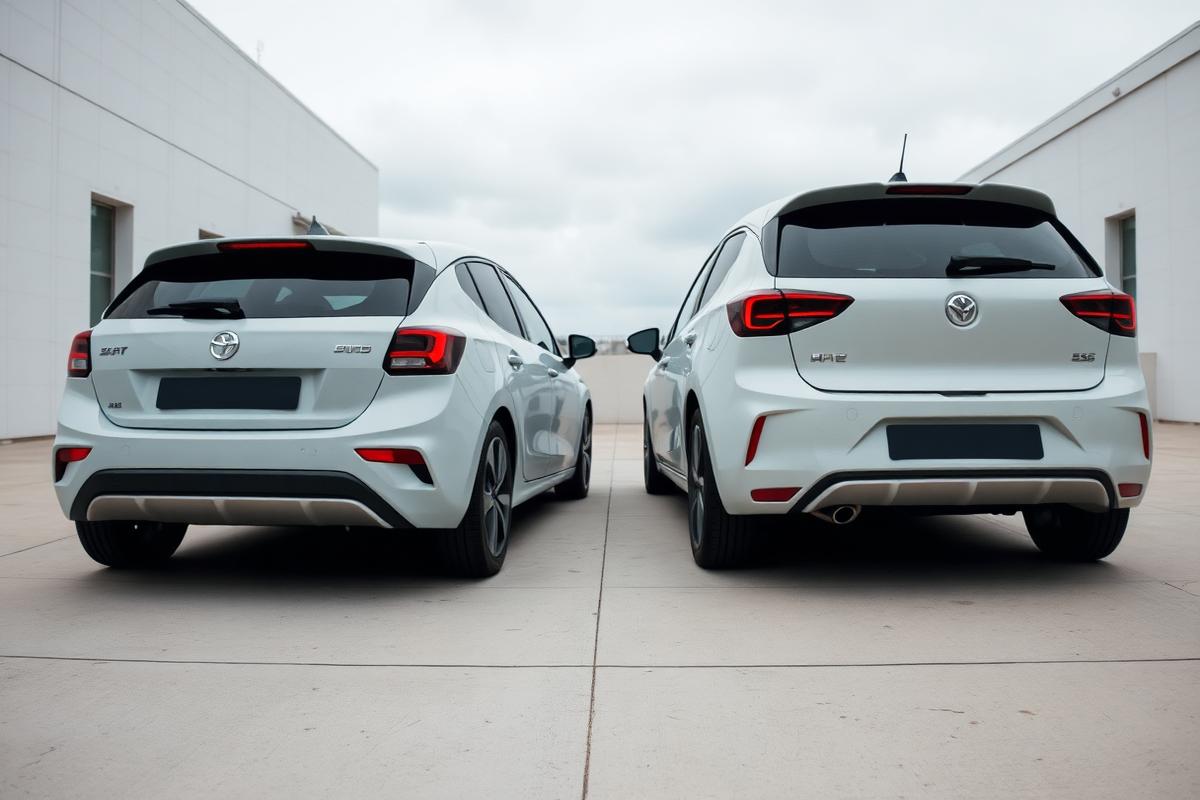
HP vs PCP — which suits you?
A straight comparison of Hire Purchase and PCP: monthly cost, mileage, ownership and total cost over four years — written by UK brokers.

Car finance payment calculator
Estimate your monthly car finance payment on HP or PCP. See how deposit, term and APR change the figure. Illustrative only, no credit search.

Broker vs direct lender — which actually saves you money?
An honest comparison of using a car finance broker vs applying direct to a lender: rate, choice, footprint, commission and speed — with real UK examples.