Buying from a franchised dealer — what you actually get
- FCA regulated
- No obligation
- Free to check
- Typical premium over market5–10%
- Inspection points100–150
- Warranty length12–24 months
- Finance accessFull — maker + panel
- Consumer Rights ActFull

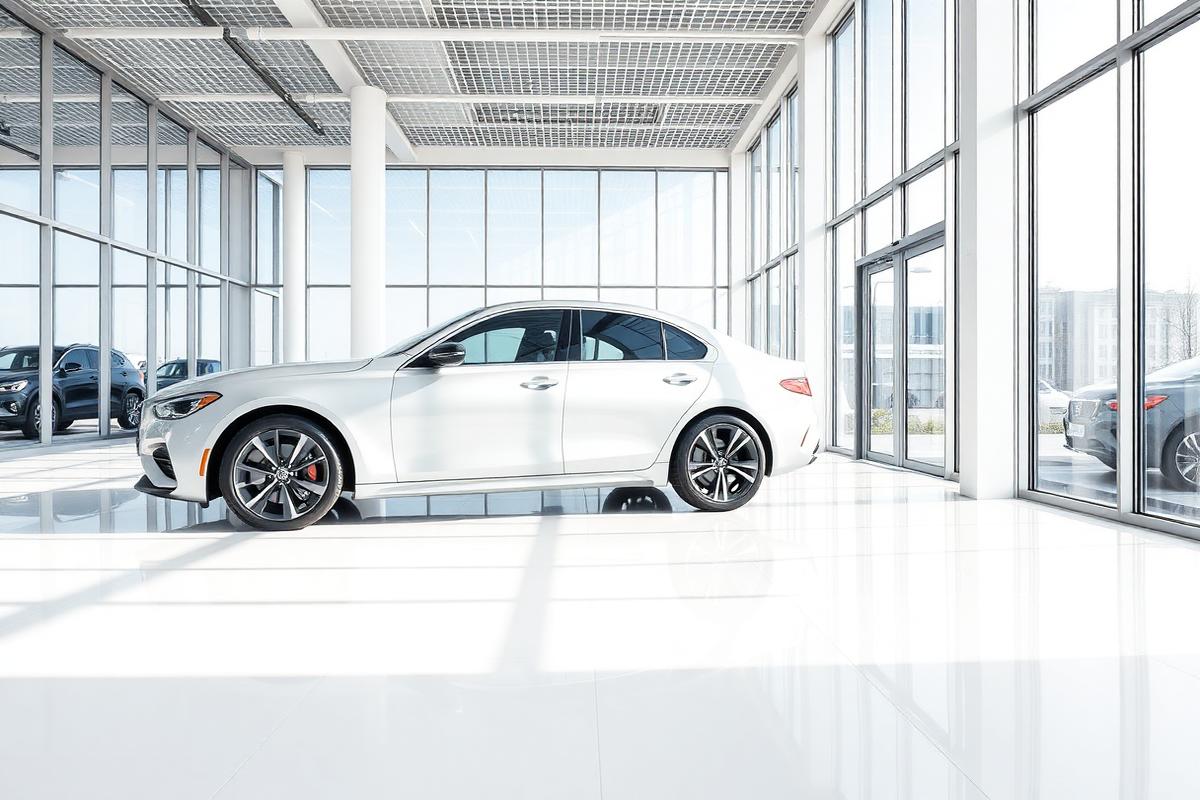
A franchised dealer is a retailer contractually appointed by a car manufacturer to sell that brand's cars, both new and used. In the UK there are roughly 4,500 franchised outlets across around 40 mainstream and premium brands. What you're buying from a franchised dealer is not really the cheapest available car — it almost never is — but a specific bundle of manufacturer-standard inspection, warranty, finance and after-sales support that is difficult to reproduce anywhere else in the market.
The trade-off is straightforward. Sticker prices at a franchised outlet typically run 5% to 10% above the market rate for the equivalent car sold by an independent, and often 8% to 15% above a private-sale listing. In return you get an approved-used programme (BMW Premium Selection, Volkswagen Das WeltAuto, Ford Approved, Mercedes-Benz Approved Used and the like) that includes a documented 100- to 150-point inspection, a warranty of 12 to 24 months, a period of breakdown cover, and a return-or-exchange window that some manufacturers extend beyond the statutory minimum.
What's actually in an approved-used bundle
The approved-used programme is where a franchised dealer earns most of its premium. Every mainstream UK manufacturer runs one, and although the names and inspection point counts differ, the components are consistent enough that a buyer can compare them like-for-like. Understanding what's included, and what isn't, is the difference between paying a fair premium for real protection and paying a premium for badge alone.
| Component | Typical inclusion | What it means in practice |
|---|---|---|
| Multi-point inspection | 100–150 points | Every wear item checked and either passed or replaced before sale |
| Extended warranty | 12–24 months | Manufacturer-backed cover, honoured at any franchised branch nationally |
| Breakdown cover | 12 months | Roadside recovery included as standard, often Europe-wide |
| Mileage cap for entry | Under 60,000–100,000 miles | Cars over the cap don't qualify; they're sold as standard used |
| Age cap for entry | Under 5–8 years | Older cars can't enter the scheme regardless of condition |
| Exchange window | 7–30 days / 500–1,000 miles | Return or exchange for another car if you're not happy — brand-dependent |
Where the price actually comes from
The franchised price is not arbitrary. Roughly half the premium over an independent dealer is the cost of the approved-used inspection itself — replacing tyres, brakes and wear items on cars that would otherwise be sold with them fitted. Another quarter is the manufacturer warranty and breakdown cover. The remaining quarter is showroom cost: main-dealer sites are expensive to run, sit on prime land, and carry high-touch after-sales staff. None of this makes the premium worth it for every buyer — but it does make it real cost, not pure margin.
Finance at a franchised dealer
Franchised dealers are where manufacturer-backed finance is easiest to access. Every UK carmaker runs a captive finance house (BMW Financial Services, Volkswagen Financial Services, Ford Credit, Mercedes-Benz Financial Services and so on) and they compete hardest on deposit contributions and (A car finance product with lower monthly payments and a large optional final payment (the balloon) if you want to keep the car.) subvention on the maker's own franchised sites. On a subvented PCP, the manufacturer effectively pays part of the interest or part of the deposit to move stock, and the resulting (Annual Percentage Rate — the yearly cost of borrowing including interest and standard fees, used to compare finance offers on a like-for-like basis.) can genuinely undercut what an independent broker can reach on the same car.
That advantage is real but partial. Captive finance is usually most competitive on new cars and low-mileage current-generation used cars — the stock the manufacturer is actively promoting. On older approved-used cars, on last-generation stock, or on prime-credit buyers who could qualify for the cheapest non-captive rates elsewhere, an independent broker often matches or beats the dealer's quote. The right move is always to get the dealer's best offer in writing and then compare, not to assume either side wins by default.
Franchised finance is a genuinely great deal when the manufacturer is subventing rate — usually on a car they're keen to shift before a facelift or a model year change. Outside those pockets, a broker can often match the APR and beat the term flexibility. Get both quotes and compare on total cost payable, never on APR alone.
Consumer protection at a franchised dealer
Every regulated UK trader — franchised or independent — sits under the Consumer Rights Act 2015. That gives you a 30-day short-term right to reject on any car that isn't of satisfactory quality, fit for purpose or as described, and a reversed burden of proof for the first six months. Franchised dealers rarely get to the point of a Section 75 or short-term rejection claim, because the manufacturer's own quality standards mean pre-sale faults are largely caught during inspection. But if something does slip through, the protection is exactly the same as anywhere else — and the manufacturer's brand risk means franchised sites almost always resolve claims faster than independents.
- Definition
- Approved-used programmeA manufacturer-run scheme that lets franchised dealers sell used cars under an extended factory warranty, provided the car passes a defined multi-point inspection.Programmes are brand-specific — Audi Approved, BMW Premium Selection, Ford Direct and so on — but the substance is similar. Cars over a set age or mileage cap don't qualify; cars that do carry warranty and breakdown cover honoured across the brand's UK network.
Negotiating at a franchised dealer
Franchised sales staff work to different metrics than independents. Their pay is often driven more by manufacturer targets — units shifted in a quarter, add-on penetration rates, finance conversion — than by pure margin on a single car. This means the discount on the car itself is usually smaller (3–5% is a typical ceiling on a used car, less on a new one) but the room to move on extras and finance can be larger. GAP insurance, service plans, tyre-and-alloy cover and paint protection are the most negotiable items on a franchised deal. Deposit contributions on subvented PCPs are also more negotiable at the end of a manufacturer promotional quarter than at the start.
- Ask for the total amount payable in writing, with and without every extra listed separately.
- Time your visit to the end of a manufacturer promotional quarter (March, June, September, December).
- Compare the dealer's PCP offer against a broker quote on the same car before committing.
- Decline GAP and paint protection on the first pass; add them back only if you actually want them.
- Ask what the dealer will do on price if you take their finance vs bring your own — the answer is revealing.
When a franchised dealer is the right call
The franchised premium is worth paying when three conditions hold. First, the car is under 5 years old and the manufacturer warranty is a genuine part of the value — for a 3-year-old premium-brand car with electronics and complex driver-assistance systems, that warranty is often worth its full sticker premium. Second, you value the exchange window and the after-sales network — for a first car, an ULEZ-compliant urban car, or a car you'll drive on long-distance business, that support matters. Third, you have a specific brand relationship — servicing history, familiarity with the dealership, an existing PCP being rolled over — that makes staying inside the brand simpler than leaving it.
Outside those three cases, the franchised premium is often better spent elsewhere. A cheaper independent purchase plus an extended aftermarket warranty (RAC, Warrantywise, MotorEasy) can reproduce most of the protection at 30–40% lower total cost, particularly on cars over 5 years old. This is not a criticism of franchised dealers — it's simply what the market prices in.
The bottom line
The franchised channel earns its price on newer, higher-value cars where the manufacturer warranty and the inspection standard genuinely offset the premium. As cars age past five years the calculation tightens; past eight years the premium is usually harder to justify against a well-chosen independent. Match the channel to the age of the car, not to habit or brand loyalty, and the premium either earns out or it does not — but it does so on the numbers, in the open. That is the transparency you are paying the franchised premium for in the first place, and any dealer who resists showing it to you is not offering the value the channel promises.
Sources
- Society of Motor Manufacturers and Traders · Franchised dealer network statistics · 1 January 2025
- Financial Conduct Authority · Motor finance market study · 1 November 2024
- Legislation.gov.uk · Consumer Rights Act 2015 · 26 March 2015
- gov.uk · Motoring — buying a vehicle · 1 January 2026
- Finance & Leasing Association · FLA motor finance statistics · 1 February 2025
- Competition and Markets Authority · Motor retail sector reviews · 1 September 2024
Common questions
Is a franchised dealer always more expensive than an independent?
On a like-for-like car, almost always yes — 5% to 10% higher is typical. The premium buys the approved-used inspection, extended manufacturer warranty and breakdown cover. Whether it's worth paying depends on the age of the car and how much you value the branded support network.Does the manufacturer warranty transfer if I sell the car privately later?
Yes. Approved-used warranties are attached to the vehicle, not the buyer, and transfer automatically to any subsequent private owner within the warranty period. This is one of the reasons approved-used cars hold their value slightly better on resale.Can I negotiate at a franchised dealer or are prices fixed?
You can always negotiate. The ceiling is usually 3–5% off a used car and rather less off a new one, but the room to move on extras — GAP, service plans, paint protection — and on finance deposit contributions is often larger than the room on the sticker itself.What happens if a fault appears in the first month?
You have a 30-day short-term right to reject under the Consumer Rights Act 2015: full refund if the car isn't of satisfactory quality, fit for purpose or as described. Most franchised dealers will offer a repair first, which is legally acceptable, but the choice is ultimately yours.Do I have to take the dealer's finance?
No. You can bring finance from any authorised UK lender or broker. Manufacturer-subvented PCP deals are sometimes hard to beat on rate, but on any non-subvented used car a broker quote is worth getting for comparison.Are approved-used cars always inspected properly?
The inspection is contractually required and audited by the manufacturer, so on a genuine approved-used car you can rely on it. Occasionally cars are sold at a franchised site as 'used' but outside the approved-used programme — always confirm which category applies before you commit.
Check what you'd be offered — no impact on your credit score.
Real people, straight answers. Talk to us before you apply if you want to.
People also ask
How long does buying a car in the UK actually take?
From opening a shortlist to driving the car home, 2 to 6 weeks is typical. A used-car purchase with an existing soft-search quote can be done in 48 hours; a bespoke new-car order from a factory sometimes takes 3 to 6 months.
Is buying privately worth the saving?
Only if you accept the loss of consumer protection and the near-total loss of finance options. On a mainstream car, the private-sale saving is often absorbed by the higher risk of undisclosed faults and the difficulty of financing the purchase.
Are independents less safe than franchised dealers?
Not inherently. Both operate under the same Consumer Rights Act and Financial Conduct Authority framework. Individual quality varies more at independents than at franchised sites, so pre-visit checks — Motor Ombudsman membership, Companies House, honest review distribution — matter more.
From Buying from an independent dealer — the fair-value channel
What warranty comes with an independent purchase?
Typically 3 months dealer-backed as standard, with extended aftermarket warranties available for £150–£400 covering 12–24 months. Compare exclusions carefully — wear-and-tear cover is worth substantially more than mechanical-breakdown-only cover.
From Buying from an independent dealer — the fair-value channel
Related reading

Buying a car in the UK — the complete 2026 journey
How to buy a car in the UK end-to-end: budget, product, sourcing, viewing, checks, negotiation, paperwork, delivery and the first 30 days.
Buying from an independent dealer — the fair-value channel
Independent dealers price closer to the market and negotiate harder than franchised. Full 2026 guide: what to check, protection, finance and pitfalls.

Buying from an online car supermarket — Cinch, Cazoo, Motorpoint and the rest
Cinch, Cazoo, Heycar, Motorpoint and the online supermarkets sit between franchised and independent. 2026 pricing, protection, delivery.