
Buying from an independent dealer — the fair-value channel
- FCA regulated
- No obligation
- Free to check
- Typical price vs marketAt or 2–3% below
- Negotiation room5–8% is common
- Warranty3–12 months, dealer-backed
- Finance accessBroker panel, full
- Consumer Rights ActFull

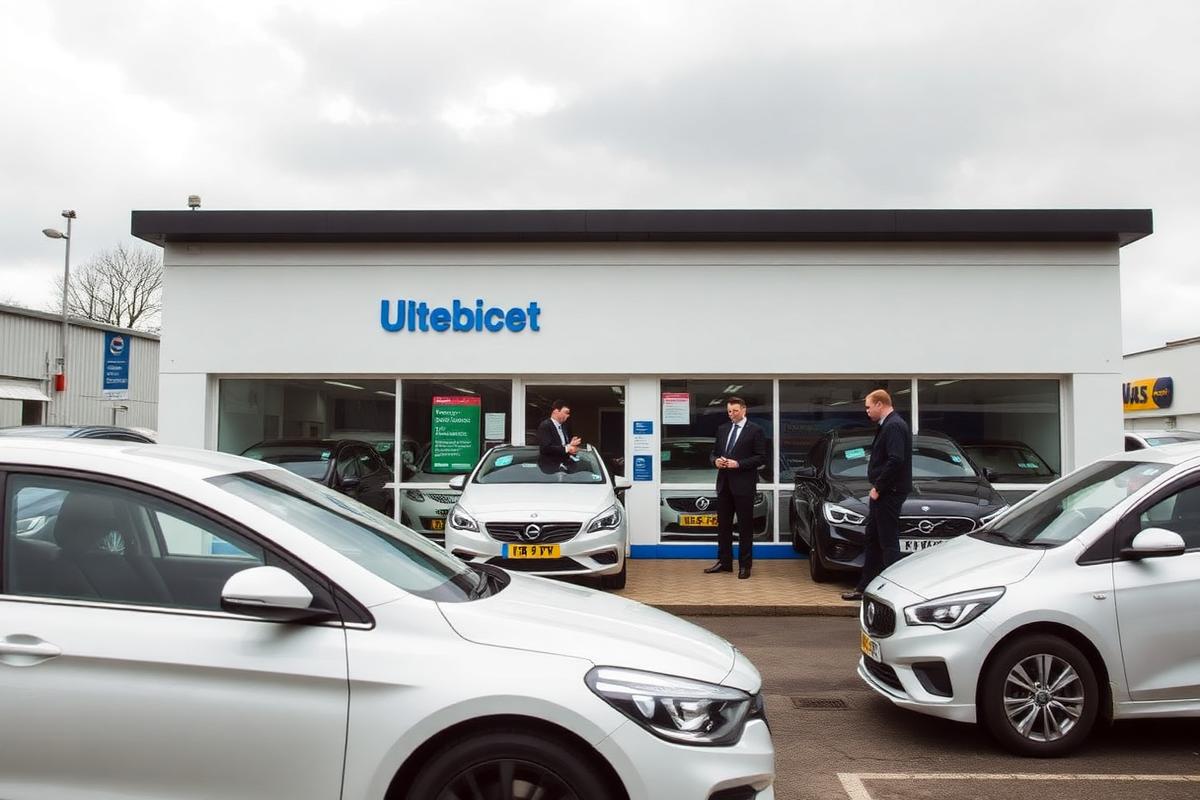
Independent dealers sit at the middle of the UK used-car market and, for most buyers most of the time, they are also the best-value channel. They are registered trade sellers — VAT-registered where relevant, subject to Consumer Rights Act 2015 obligations, funded through their own or broker-arranged wholesale finance — but they aren't tied to a single manufacturer. That freedom lets them source cars where the trade prices are best, and it lets them price to move rather than to hold a franchise standard.
Roughly 40% of used-car transactions in the UK go through independents according to Finance & Leasing Association data, and the channel is the largest single source of broker-financed cars on our own panel. Buyers who go to independents systematically get better sticker prices than franchised, harder-negotiated deals than online supermarkets, and stronger consumer protection than private sales. What varies is quality between individual outlets — much more than at a main dealer, where the manufacturer polices standards. The counterweight is that a small amount of pre-visit due diligence turns an independent purchase into the best value the UK market offers.
What separates a good independent from a bad one
Independent dealer quality is a long tail: a small number of exceptional single-site independents rival any franchised outlet in the country, a large mainstream group of competent traders operate professionally and honestly, and a smaller minority of poor operators sit at the bottom. Almost every online complaint about the UK used-car trade sits inside that minority. Three checks, done before you drive to any outlet, will filter it out for you almost entirely.
- Trading Standards / Motor Ombudsman — check the trader is signed up to the Motor Ombudsman code, which requires an independent complaints process.
- Companies House — check the trading entity is a live UK company with directors traceable and accounts filed. A dissolved or newly-incorporated shell is a warning sign.
- Reviews with a real distribution — Google or Autotrader reviews with both praise and honest criticism, not only glowing five-star reviews posted in the same week.
- Physical premises with a visible forecourt on Streetview — a trader operating from a residential address is not necessarily fraudulent, but is worth calling before travelling.
- Registered with a broker panel like ours — panel lenders do their own pre-onboarding checks and won't fund a dealer with a poor complaints history.
Price mechanics at an independent
Independents typically list at or slightly below the market rate — the number the trade guides (CAP Clean, Glass's Retail) publish for a car of that spec, age and mileage. The discount is not because the car is worse but because the site is cheaper to run than a franchised outlet and because independents source from auctions and part-exchange rather than manufacturer stock. Add to that a negotiation room of 5% to 8% on most cars, and the price gap between a franchised and independent purchase of the equivalent car often runs to £1,000–£1,500.
| Franchised approved-used | Independent | |
|---|---|---|
| Sticker price | £15,800 | £14,600 |
| Room to negotiate | £400 (2.5%) | £800 (5.5%) |
| Manufacturer warranty | 12 months | None |
| Dealer warranty | None | 3 months typical, 12 available |
| Aftermarket warranty top-up | N/A | £150–£400 for 12 months |
| Effective price to drive away | £15,400 | £14,000–£14,200 |
Warranty at an independent
Independent dealers rarely have a manufacturer warranty to offer, but almost all will include a short dealer-backed warranty — usually 3 months on parts and labour — and most will sell an extended aftermarket warranty at the point of sale. The aftermarket warranty market in the UK is competitive and largely legitimate, but coverage varies enormously. Read the exclusions before paying: the difference between a warranty that covers wear-and-tear failures and one that covers only sudden mechanical breakdown is the difference between real protection and near-worthless paperwork.
- Definition
- Aftermarket warrantyA repair-cost insurance policy sold at or after the point of car sale, underwritten by a UK-authorised insurer, covering mechanical or electrical failures for a defined period.Not to be confused with the manufacturer warranty, which is included in the car's original purchase. Aftermarket warranties vary widely: check whether wear-and-tear is included, what the claim limit is per item, and whether servicing at a non-approved garage voids cover. Reputable providers include RAC, AA, Warrantywise and MotorEasy.
Finance at an independent
Independents almost universally use a broker panel — either their own established relationships with a handful of UK lenders, or a broker partner like WeCarFinance to shop the panel on their behalf. The result for buyers is usually a wider range of accepted credit profiles than a franchised dealer captive finance can offer. Where a manufacturer's finance house declines an application, an independent's broker panel will often approve it, sometimes on very similar terms.
The single biggest advantage of independents on finance is credit breadth. Manufacturer captives typically only lend to prime and near-prime. A broker panel spans prime, near-prime, sub-prime and specialist lenders — so an applicant declined by a captive can still walk out with a car and a fair-rate deal.
Consumer protection at an independent
The Consumer Rights Act 2015 applies in full — 30-day short-term right to reject, six-month reversed burden of proof on faults, and unlimited-length final right to reject after the six-month window subject to reasonable repair attempts. Section 75 of the Consumer Credit Act adds joint-and-several liability on the finance provider for any purchase between £100 and £30,000. Between these two statutes, an independent purchase carries the same statutory protection as a franchised one. The practical difference is enforcement: a franchised dealer under manufacturer contract has a stronger incentive to resolve claims quickly; an independent under their own trading name may need more chasing.
Where to walk away
Some warning signs at an independent are worth acting on immediately. A trader who refuses to let you take the car to an independent inspection. A V5C that doesn't show the trader in the current keeper chain. A private-sounding invoice on trader premises (private sales invoices exist to disguise consumer trading and lose you Consumer Rights Act protection). A price meaningfully below CAP Clean with no explanation — usually a sign of a category-N history or a mileage question. None of these on their own confirms fraud, but all of them are your prompt to slow the transaction down and get answers in writing before continuing.
The bottom line
Most independent-dealer purchases finish uneventfully. The industry data — collected by the Motor Ombudsman and by the FCA — consistently shows that roughly three-quarters of complaints are resolved at the dealer stage without escalation, and a further one in six via an ombudsman route. The tail of unresolved cases is small but concentrated in a minority of poor-quality outlets which the pre-visit checks discussed above are specifically designed to filter out. Approach the channel systematically and it delivers, year after year, the best combination of price, protection and finance access the UK used-car market offers most buyers.
The one long-run truth about buying used cars in the UK is that the buyers who win are the ones who prepare. Independents reward that preparation more than any other channel — the negotiation room is real, the warranty is negotiable, the extras are optional, and every one of those levers moves in your favour when you know the market and take the time to walk into the yard as an informed buyer. Compared to a franchised buyer who walks in expecting the sticker to be the sticker, an independent buyer who has spent an hour on CAP Clean and a paid history check consistently ends up with a better car for less money.
A final practical note: keep a written record of everything the independent tells you about the car. Verbal claims about service history, previous owners or accident status are hard to enforce later; the same claims written on the invoice or in an email are enforceable under the Consumer Rights Act. Ask for the key claims in writing before you commit, and any dealer worth buying from will provide them without hesitation. The dealers who refuse are telling you something important about how they will handle a dispute.
Sources
- Finance & Leasing Association · FLA motor finance statistics · 1 February 2025
- Motor Ombudsman · Consumer Motor Industry Code of Practice · 1 January 2024
- Legislation.gov.uk · Consumer Rights Act 2015 · 26 March 2015
- Financial Conduct Authority · Motor finance consumer information · 1 November 2024
- Companies House · Company search service · 1 January 2026
- gov.uk · Buying and selling a vehicle · 1 January 2026
Common questions
Are independents less safe than franchised dealers?
Not inherently. Both operate under the same Consumer Rights Act and Financial Conduct Authority framework. Individual quality varies more at independents than at franchised sites, so pre-visit checks — Motor Ombudsman membership, Companies House, honest review distribution — matter more.What warranty comes with an independent purchase?
Typically 3 months dealer-backed as standard, with extended aftermarket warranties available for £150–£400 covering 12–24 months. Compare exclusions carefully — wear-and-tear cover is worth substantially more than mechanical-breakdown-only cover.Do independents accept part-exchange?
Yes, almost universally. The valuation is often 2–4% lower than a franchised dealer would offer for the same trade-in, because the independent has fewer routes to sell it on. Compare part-ex offers separately from the purchase negotiation.Can I still get finance if my credit isn't perfect?
Yes. Independents typically work with a broker panel that includes prime, near-prime and specialist lenders — a broader credit range than manufacturer captive finance covers at a franchised site.How much room is there to negotiate?
Typically 5% to 8% on cars over 3 years old, less on very recent cars. Extras and warranties usually have wider room than the sticker itself. Always negotiate the total amount payable, not the monthly figure.What are the biggest red flags at an independent?
Refusal of an independent inspection, a V5C that doesn't match the trader's current keeper, cars priced significantly below CAP Clean with no explanation, or invoices written as private sales when the trader is clearly a business. Any one of these is reason to walk away.
Check what you'd be offered — no impact on your credit score.
Real people, straight answers. Talk to us before you apply if you want to.
People also ask
How long does buying a car in the UK actually take?
From opening a shortlist to driving the car home, 2 to 6 weeks is typical. A used-car purchase with an existing soft-search quote can be done in 48 hours; a bespoke new-car order from a factory sometimes takes 3 to 6 months.
Is buying privately worth the saving?
Only if you accept the loss of consumer protection and the near-total loss of finance options. On a mainstream car, the private-sale saving is often absorbed by the higher risk of undisclosed faults and the difficulty of financing the purchase.
Is a franchised dealer always more expensive than an independent?
On a like-for-like car, almost always yes — 5% to 10% higher is typical. The premium buys the approved-used inspection, extended manufacturer warranty and breakdown cover. Whether it's worth paying depends on the age of the car and how much you value the branded support network.
From Buying from a franchised dealer — what you actually get
Does the manufacturer warranty transfer if I sell the car privately later?
Yes. Approved-used warranties are attached to the vehicle, not the buyer, and transfer automatically to any subsequent private owner within the warranty period. This is one of the reasons approved-used cars hold their value slightly better on resale.
From Buying from a franchised dealer — what you actually get
Related reading

Buying a car in the UK — the complete 2026 journey
How to buy a car in the UK end-to-end: budget, product, sourcing, viewing, checks, negotiation, paperwork, delivery and the first 30 days.
Buying from a franchised dealer — what you actually get
Franchised main dealers cost more but deliver approved-used inspections, manufacturer warranty and easier finance. 2026 pros, cons, negotiation.

Buying from an online car supermarket — Cinch, Cazoo, Motorpoint and the rest
Cinch, Cazoo, Heycar, Motorpoint and the online supermarkets sit between franchised and independent. 2026 pricing, protection, delivery.