

Proving income as a self-employed driver — the documents lenders actually accept
- FCA regulated
- No obligation
- Free to check
- Bank statements3–6 months, business account
- HMRC evidenceSA302 or tax year overview
- Platform summariesUber, Bolt, Free Now — earnings breakdown
- SeasonalityShow 12 months if income is uneven

A self-employed taxi or PHV driver does not have the one thing a lender's automated affordability engine is built around — a monthly payslip from a PAYE employer that lands in a bank account and matches a P60 at year end. Instead, income arrives in daily platform transfers, weekly cash takings, VAT-registered fares, and lumpy months around holidays and school terms. This guide explains what documents actually build a clean affordability picture, in what combination, and how to package them so an underwriter can approve the application quickly.
What lenders are really assessing
Under FCA CONC 5, a lender has a duty to run a proportionate affordability assessment on every regulated credit application. For a PAYE employee, the payslip and P60 do most of the work. For a self-employed driver, the lender is trying to answer three questions from documents: is this income real, is it stable enough to service the payment for the length of the agreement, and what are the outgoings? The document mix below is what actually answers those questions.
- Definition
- SA302A summary of your self-assessment tax calculation issued by HMRC after your annual return is submitted.The SA302 shows total income, tax due, and how it was calculated. It is the closest self-employed equivalent to a P60. Lenders use it as the anchor document — the number on the SA302 is what they credit as the applicant's declared income.
The three-document baseline
| Document | What it shows | Where you get it |
|---|---|---|
| 3–6 months business bank statements | Actual money in, actual money out | Your bank — download PDFs |
| Latest SA302 or tax year overview | HMRC-verified declared income | HMRC online account (self-assessment) |
| Platform earnings summaries | Fare-level breakdown, tips, service fees | Uber, Bolt, Free Now driver apps |
| Optional: last two years accounts | Multi-year stability picture | Your accountant or bookkeeping software |
| Optional: VAT returns | For VAT-registered drivers with turnover over threshold | HMRC online account |
Bank statements — what the underwriter is scanning for
The underwriter reads bank statements far more forensically than most drivers realise. They are looking for the platform transfers you would expect (weekly settlements from Uber, Bolt), a steady pattern rather than a single big spike, evidence you separate business from personal spending, and — critically — the absence of unpicked gambling patterns, high-interest loan repayments, and unauthorised overdrafts. A tidy pattern for 3 months matters more than a peak month; consistency wins over headline number.
If you run a single account for business and personal, you are not disqualified — most sole-trader drivers do — but the underwriter has more work to do to separate the two flows. Providing a short explanatory note ('platform transfers total £X across the period; personal transfers £Y; net business income £Z') can save an underwriter an hour and get a decision back the same day rather than the next week.
SA302 — the anchor document
The SA302 is the number the lender will lean on hardest. It is HMRC-verified and hard to argue with. It shows the total income you declared for the last tax year and how the tax on it was calculated. Some lenders will accept a 'tax year overview' instead, which is a slightly shorter form covering the same ground. If your most recent SA302 is over 15 months old — i.e. you have not yet filed for the last full tax year — you can provide the most recent set plus year-to-date bookkeeping to bridge.
The one honest problem here is that drivers who declare very tight income to minimise tax may find their SA302 shows a number too low to support the finance they want. There is no clever way round this. The lender is required to lend on your declared income, not on what you say your real income is. If the SA302 is too low, either the vehicle needs to be cheaper, the deposit larger, or the term longer — or the affordability case cannot be built.
Platform summaries — Uber, Bolt, Free Now
Every major driver platform issues weekly and monthly earnings summaries in the driver app. These are useful for two reasons: they give the underwriter a granular picture of how the earnings are made up (fare income, tips, tolls, service fees deducted), and they cross-reference the bank statement transfers to prove the settlements are what they claim to be. A driver who works across two platforms should provide both — the totals combined into a single monthly income figure with a short note explaining the split.
The single biggest jump in taxi-driver approval rates I see comes from packaging. Same driver, same income, same credit file — but paperwork submitted in a clean order with a one-page summary versus a chaotic upload of every screenshot they own. Ten minutes of packaging is worth a percentage point on the rate.
Handling seasonality
Taxi and PHV income is not flat across the year. December is usually the biggest month; January and February the slowest. Airport-heavy drivers see peaks around school holidays; night drivers see weekly rhythms that do not match any Monday-to-Friday pattern. If your income has more than about 30% variance across the year, a lender will want to see 12 months rather than 3 or 6 — otherwise they cannot tell whether the 3 months you submitted are peak or trough.
The affordability figure a lender uses in that case is usually a rolling 12-month average rather than a spot 3-month projection. That is normally more favourable than a spot check taken in a slow month and less favourable than a spot check taken in December — either way, the 12-month view is what the underwriter will settle on.
Illustrative — how documentation completeness maps to approval outcomes
Numbers are illustrative and depend heavily on the driver's credit profile, deposit and licensing status. The point is that each layer of documentation adds real approval probability — the marginal return on tidying paperwork is high compared with almost anything else a driver can do at the application stage.
Cash-heavy drivers
Black-cab drivers in London and rank-based drivers in many towns still take a material portion of fares in cash. Cash is legitimate income but harder to evidence — it needs to appear on the bank statement as a deposit and on the SA302 as declared income. Drivers who bank their cash weekly and declare it in full are in a strong position; drivers who bank irregularly or under-declare will find lenders drop from the panel quickly. There is no lender who will lend on cash income that is not banked and declared.
What lenders will not accept
- Screenshots of a platform app as the only proof of income — must be an official statement or CSV export.
- Handwritten cash books instead of bank statements.
- A single peak-month bank statement — needs 3–6 months minimum.
- SA302 more than 18 months old with no year-to-date bookkeeping to bridge.
- Claimed income that materially exceeds the SA302 without a documented explanation.
The one-page cover note
A short cover note is the single cheapest thing a self-employed driver can do to improve approval odds. Half a page: your licensing authority and plate number, average weekly earnings across the last 12 weeks, monthly declared income from the most recent SA302, main platform(s) worked, deposit available, and any exceptional items (a slow month, a period out with the car in the shop). It replaces guesswork with facts and lets the underwriter make a decision, not an interpretation.
Where to go from here
If you are working out which vehicle to buy, our ULEZ / CAZ guide covers the licensing angle. If you have not yet arranged taxi-specific finance, the taxi-finance explainer walks through why a personal (A car finance product where you pay a fixed monthly amount and own the car outright at the end of the term.) will not do the job. The Taxi and PHV hub links to the named taxi adviser on our panel who can help package your documents before the application runs.
Sources
- FCA · CONC 5 — Responsible lending · 1 May 2024
- HMRC · Get an SA302 tax calculation · 1 October 2024
- HMRC · Self-employment income and self-assessment · 1 June 2024
- MoneyHelper · Buying a car when self-employed · 1 September 2024
- Transport for London · PHV driver earnings guidance · 1 August 2024
- Uber (driver support) · Tax and earnings summaries for UK drivers · 1 November 2024
Common questions
How many months of bank statements do lenders want?
Three is the minimum on most lender panels, six is common, and twelve is expected if your earnings are seasonal. Providing the middle option — six months — usually covers most cases without unnecessary paperwork.Do I need an accountant to get car finance?
No — plenty of sole-trader drivers file their own self-assessment and get finance without an accountant. What matters is that the SA302 and bank statements agree.Can I use my personal current account as proof?
Yes, but the underwriter has to do more work to separate personal and business flows. A short note explaining which credits are business income speeds things up.What if my declared income is lower than my actual earnings?
The lender is required to assess affordability against declared income. If declared income is too low, either the vehicle needs to be cheaper, the deposit larger, or the term longer — the alternative is not to lend more against income you have not declared.Do platform summaries replace bank statements?
No — they complement each other. Platform summaries show what you earned; bank statements show what actually arrived. A lender wants both.
Check what you'd be offered — no impact on your credit score.
Real people, straight answers. Talk to us before you apply if you want to.
People also ask
Can I finance any car for taxi or private hire work?
No. Every licensing authority publishes an eligible-vehicle list — age caps, emissions standards, sometimes wheelchair-accessibility or colour rules — and only cars that meet those rules can be plated. Separately, some regulated finance lenders exclude hire-and-reward use in their acceptance criteria. Check both the council list and the lender's policy before you commit to a specific vehicle.
How do I prove my income if I drive across multiple apps?
Most taxi-friendly lenders accept three months of personal or business bank statements alongside your most recent SA302 or accountant's letter. Platform earning summaries from Uber, Bolt or Free Now help as corroborating evidence but rarely stand alone. A driver in their first trading year should speak to an adviser about bridging with an accountant's letter before applying.
Can I quietly use a personal HP for taxi work?
No. The clause is standard and enforceable. Insurers, licensing authorities and even DVLA plate records make it visible. The finance company can call the agreement in default and the insurer will void cover.
From Taxi car finance explained — why a personal HP will not cover plated use
Do all lenders offer taxi finance?
No. It is a specialist product on a narrower panel. Most mainstream personal finance lenders do not offer it; a broker with a taxi desk arranges via a hire-and-reward-approved panel.
From Taxi car finance explained — why a personal HP will not cover plated use
Related reading

Car finance for taxi and private hire drivers
Finance for private hire and hackney drivers: council PHV eligibility, self-employed income proof, ULEZ and clean-air-zone compliant vehicles, and how

Taxi car finance explained — why a personal HP will not cover plated use
Personal car finance does not cover taxi or PHV use. The three vetoes — licensing, lender, insurer — and how taxi-specific HP works in practice, without
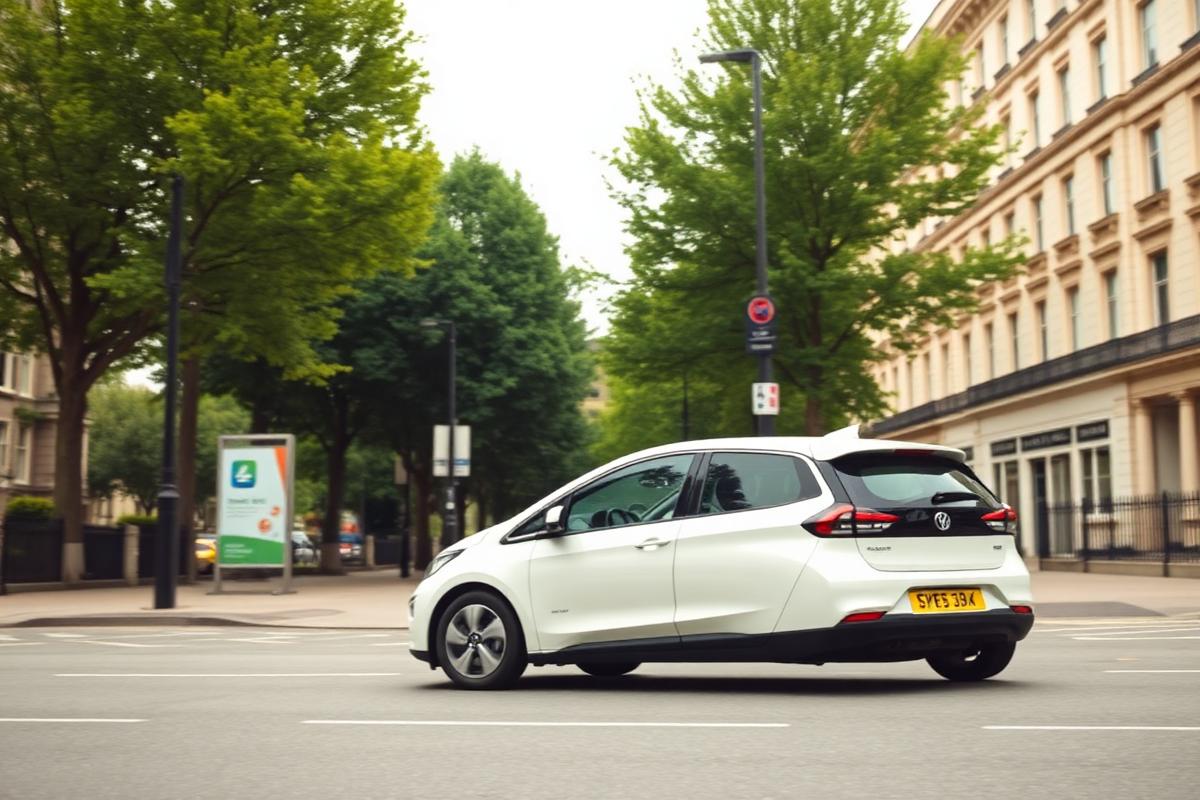
ULEZ and CAZ compliant cars on finance — what to buy without stranding yourself
Which cars stay compliant in ULEZ and Clean Air Zones through the term of your finance agreement, why residual values matter for taxi drivers, and how HP