
Volkswagen Golf finance.
Britain's default sensible hatchback. Well-built, comfortable, wide engine choice — but the used Mk7 has two big "know-before-you-buy" gotchas: the DQ200 dry-clutch DSG and the wet-belt 1.0/1.5 TSI.
In short
This page tells you which trim is worth paying for, which engine or battery to skip, the known faults to check on a used one, and what a realistic finance picture looks like — sourced from primary UK data, not aggregators.
Illustrative only. Not a quote or lender decision.

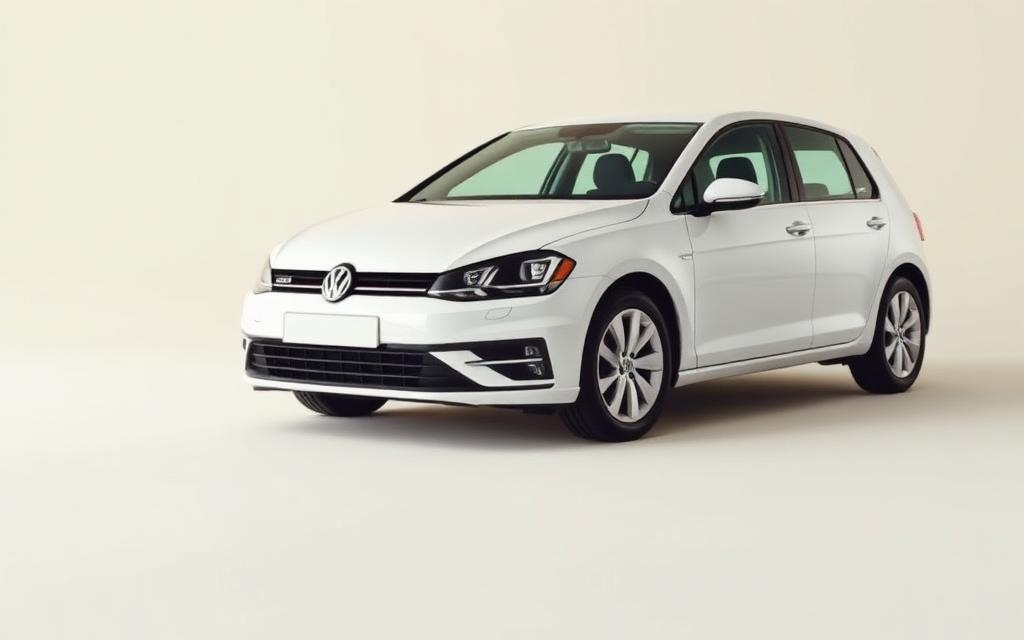
Should you buy one?
Buy it if
- Buyers who want a well-built, comfortable family hatchback with strong resale.
- Drivers cross-shopping trim levels from economical S / SE up to performance GTI.
- PCP customers who value brand perception and a large franchised dealer network.
Avoid it if
- Buyers on a very tight budget who cannot afford preventative wet-belt work on a 1.0/1.5 TSI.
- High-mileage motorway drivers who would probably be happier in a Skoda Octavia for the space at similar mechanicals.
- Buyers who dislike dual-clutch gearboxes and would rather have a torque-converter automatic.
Which trim to buy
The single most useful section — every trim rated, with reasoning.
| Trim | Years | Verdict | Why | Price delta |
|---|---|---|---|---|
| S / Life | 2012–present | best value | Covers what most owners actually use, without paying for depreciation-heavy options on higher trims. | Baseline |
| SE / Match | 2012–2020 | best value | The most popular used Mk7 trim — good kit for the money and strong dealer/parts support. | +£500–£1,000 over S |
| GT / R-Line | 2012–present | worth it | Holds value well and desirable used, but the firmer ride and larger wheels wear tyres and suspension faster. | +£1,000–£2,000 over SE |
| GTD | 2013–present | worth it | Strong performance with reasonable diesel economy — but check DPF/EGR health on any car used mainly for short trips. | +£2,500–£4,000 over SE |
| GTI | 2013–present | worth it | The 2.0 TSI EA888 is chain-driven and generally robust, and residuals are strong. Check for carbon build-up on the direct-injection intake. | +£3,000–£5,000 over SE |
| GTE (Plug-in hybrid) | 2014–present | avoid | A used GTE only makes sense with a documented high-voltage battery health check and remaining hybrid warranty. Complex, and the used premium is hard to recoup. | +£4,000–£6,000 over SE |
| R (Mk7.5 / Mk8) | 2017–present | avoid | Fast, but insurance, servicing and repair costs push it outside the "sensible Golf" thesis this page is about. | +£6,000–£9,000 over SE |
Which engine or battery
| Engine | Fuel | Real-world | Verdict | Notes |
|---|---|---|---|---|
| 1.0 TSI (EA211, 3-cyl petrol) | Petrol | 45–50 mpg | avoid | Efficient and characterful, but the wet timing belt is a known-issue design — only buy with documented preventative maintenance. |
| 1.4 TSI / 1.5 TSI (EA211 / EA211evo) | Petrol | 42–48 mpg | good | Refined and reasonably efficient. Pre-2016 1.4 TSI with cylinder deactivation (ACT) uses a conventional timing chain; the later 1.5 TSI EVO adopted the wet belt. |
| 1.6 TDI (EA288 diesel) | Diesel | 55–62 mpg | good | Frugal, chain-driven, but short-journey use clogs the DPF and EGR valve. |
| 2.0 TDI (EA288 diesel) | Diesel | 50–58 mpg | good | Strong, torquey, durable and chain-driven — the sensible high-mileage choice. |
| 2.0 TSI (EA888, GTI/R) | Petrol | 34–40 mpg | best | The engine to buy: chain-driven, well-proven, strong. Check oil consumption on very early Gen3 units. |
| 1.4 TSI Plug-in Hybrid (GTE) | Plug-in hybrid | 120–180 mpg (charging-dependent) | avoid | Real-world MPG depends entirely on charging habits — and used buyers rarely see a documented battery-health report. |
How reliable is it?
Manufacturer recalls from the DVSA vehicle-recall service, plus MOT open-data pass rates by age where a primary figure has been verified.
Recalls
- 2017-01-23 — Lights may fail without warning due to a programming issue with the On-Board Supply Control unit (R/2017/040)
- 2021-09-10 — The bolted connection of the pull rod between the electromechanical brake servo and brake pedal could come loose (R/2021/320)
Known faults and what they cost
| Issue | Symptom | Typical cost | Affected years | Source |
|---|---|---|---|---|
| Wet timing belt failure (EA211 1.0 TSI and 1.5 TSI EVO) | Timing belt runs in an oil bath and can shed rubber particles that block the oil pump pickup — often without warning until catastrophic engine failure. | £400–£700 preventative belt-and-oil-pump change · £2,500–£5,000 if the engine has failed | 2016–2022 (1.0 TSI and 1.5 TSI EVO) | HonestJohn Golf Good & Bad guide; independent VW/Audi specialists |
| DQ200 7-speed dry-clutch DSG mechatronic and clutch pack failures | Judder from a standing start, hesitation, or a "gearbox fault" warning — occasionally complete loss of drive. | £1,200–£1,800 mechatronic · £900–£1,500 clutch pack | 2013–2017 (early Mk7 DQ200 dry-clutch cars) | HonestJohn Golf Good & Bad guide |
| Water ingress via blocked plenum / pollen-filter drains | Wet footwells, damp carpets, and downstream electrical faults where water reaches the ECU / fusebox under the scuttle. | £50–£150 to clear drains · £300+ if electrics are already damaged | 2012–2020 (Mk7 / Mk7.5) | HonestJohn Golf Good & Bad guide |
| MIB2 / MIB3 infotainment freezing and unresponsive touchscreen | Screen blacks out or reboots; Apple CarPlay / Android Auto drops. | £0 if a software update clears it · £400+ if the unit needs replacing | 2017–2023 (Mk7.5 MIB2, Mk8 MIB3) | HonestJohn Golf Good & Bad guide; What Car reliability survey |
| Mk8 haptic touch-slider controls (volume / temperature) unreliability | Unresponsive touch sliders and software glitches requiring a dealer reflash. | Typically £0 under warranty | 2020–2023 (early Mk8) | What Car reliability survey |
What it costs to run
- VED band
- Standard rate £195/yr for petrol/diesel and GTE PHEV registered on or after 1 April 2017; first-year rate is CO2-banded
- Annual VED
- £195
- Servicing interval
- 10,000 miles / 12 months (fixed) or up to 18,000–19,000 miles / 2 years (variable, low-mileage drivers)
- Typical service
- £250–£350 franchised · £150–£220 independent
- Cambelt interval
- N/A on chain engines (2.0 TSI/TDI). VW does not publish a fixed interval for the wet-belt 1.0/1.5 TSI; independent specialists commonly recommend preventative replacement around 60,000–80,000 miles.
- Cambelt replacement
- £400–£700
- Typical tyres
- £90–£140/corner premium · £55–£80/corner budget
Depreciation and your PCP balloon
The bridge between car content and finance content nobody else builds.
The Golf is traditionally one of the strongest-residual family hatchbacks in the UK — historically stronger than a like-for-like Ford Focus, slightly softer than an equivalent-trim Audi A3. That matters on PCP: a higher guaranteed future value means a smaller amount to finance in the middle, which is one of the reasons Golf monthlies stay competitive even when the sticker price isn't the lowest in the class.
Compare PCP vs HP on this carWhere to buy a Golf
Best source
franchised
A franchised VW dealer or a specialist with full main-dealer history gives you the best chance of documented preventative work on the wet belt and DSG software updates, and confirmation that outstanding recalls have been completed — none of which are easy to verify from a private seller.
Viewing checklist
- Ask to see documented preventative wet-belt / oil-pump work on any 1.0 TSI or 1.5 TSI EVO.
- Drive the DSG from cold and at very low speed — feel for judder, hesitation or clunking on DQ200 dry-clutch cars.
- Lift the carpets. Any damp in the footwells means the plenum drains are blocked.
- Sit in the infotainment for five minutes. MIB2/MIB3 should respond crisply and Apple CarPlay / Android Auto should connect without freezing.
- Run the VIN through the gov.uk vehicle-recalls service and confirm every outstanding recall has been completed.
- On a GTE, ask for a high-voltage battery health report and confirm the remaining hybrid battery warranty.
- On GT / R-Line / GTI trims, look for uneven wear on the inner shoulders of the front tyres.
- Listen for turbo wastegate rattle on any TSI — a metallic buzz at 1,500–2,000 rpm on light throttle.
- On any diesel used mainly for short trips, ask for evidence of DPF regeneration events and EGR history.
Negotiation: A Golf without documented wet-belt maintenance is not the same car as one that has been maintained. Either price it £500–£1,000 lower or budget for preventative work in the first 12 months.
Finance on a Golf
HP suits keepers of this car — no mileage cap, and you own it at the end. PCP suits drivers who plan to change car every 3–4 years and want the lower monthly payment.
Hire Purchase on a Golf
Higher monthly, you own it at the end.
PCP on a Golf
Lower monthly, balloon payment at the end.
Illustrative — real rate depends on lender, deposit and credit profile
Alternatives at the same monthly cost
Ford Focus
Similar family-hatch size and price bracket, sharper handling and simpler chain-driven petrols on many years.
Audi A3
Shares the Golf's MQB platform and many engines, with a more premium interior — at a used-price premium too.
BMW 3 Series
A step up in size and prestige if you're cross-shopping higher-spec Golf GT / GTI money against a compact executive.
Sources
Sources
- GOV.UK / DVSA · VW Golf — vehicle recalls · 22 July 2026
- GOV.UK / HMRC · Vehicle tax rate tables (V149 / V149-1) · 22 July 2026
- HonestJohn · Volkswagen Golf — Good & Bad · 22 July 2026
- What Car · What Car Reliability Survey — Volkswagen Golf · 22 July 2026
- DVSA · Anonymised MOT tests and results (open data) · 22 July 2026
Financing this car
HP, PCP or lease on a Volkswagen Golf?
There is no single right way to finance a Volkswagen Golf. Hire purchase spreads the whole cost across the term and hands you the keys outright at the end, with no mileage limit and no condition inspection waiting for you. PCP defers a chunk of the value into a final balloon payment, so the monthly figure is lower for the same car, but you only own it if you pay that balloon — and you agree a mileage cap up front. A personal lease is a long-term rental: fixed cost, no ownership, hand it back at the end.
- Choose HP if you cover high mileage, keep cars for years, or want the Volkswagen Golf to be yours with no end-of-term conversation.
- Choose PCP if you like changing car every three or four years and your annual mileage is genuinely predictable.
- Choose a lease if you want one fixed monthly cost and are happy never owning the car.
Which Volkswagen Golf is worth financing?
Which Volkswagen Golf you finance matters as much as how you finance it. Our pick of the range is the 2.0 TSI (EA888, GTI/R) (34–40 mpg) — the engine to buy: chain-driven, well-proven, strong. Check oil consumption on very early Gen3 units.
Be more careful with the 1.0 TSI (EA211, 3-cyl petrol) and 1.4 TSI Plug-in Hybrid (GTE). A finance agreement locks you into a car for years, so an engine with a known weak point is a bigger commitment than it looks on a test drive — and repair bills land on top of the monthly payment, not instead of it.
On trim, S / Life is the sweet spot (Baseline). Covers what most owners actually use, without paying for depreciation-heavy options on higher trims. On finance, the difference between two trims is usually a few pounds a month — far less than the resale gap between them three years later.
The electrified versions of the Volkswagen Golf comply with UK clean air and low emission zones, which matters if you drive regularly in London, Glasgow, Edinburgh or a charging Clean Air Zone city. Over a four-year agreement, avoiding daily charges frequently outweighs a slightly higher monthly payment.
Set your mileage honestly. Under-declaring on a PCP or lease to shave the monthly payment is the most expensive mistake buyers make on a car like this, because excess mileage is charged per mile at the end and it is not negotiable once the contract is signed.
Buying and financing a Volkswagen Golf without regret
For this model we would buy from a franchised or approved-used dealer. A franchised VW dealer or a specialist with full main-dealer history gives you the best chance of documented preventative work on the wet belt and DSG software updates, and confirmation that outstanding recalls have been completed — none of which are easy to verify from a private seller.
Lenders have their own opinion of the car too. Most mainstream UK panel lenders want the vehicle to be under roughly ten years old at the end of the agreement, under about 100,000 miles, priced in line with trade guides and bought from a VAT-registered dealer rather than privately. A Volkswagen Golf that is well within those limits opens up more of the panel — and a wider panel usually means a better rate.
- Get the settlement figure in writing if you are part-exchanging a financed car.
- Check the finance quote is on APR, not a flat rate — flat rates always look cheaper than they are.
- Confirm the mileage allowance and any excess-mileage pence-per-mile charge before signing.
- Budget for insurance, tax, servicing and tyres alongside the monthly payment, not after it.
- A Golf without documented wet-belt maintenance is not the same car as one that has been maintained. Either price it £500–£1,000 lower or budget for preventative work in the first 12 months.
Guidance only, not personal financial advice. Any money figures are illustrative until a lender issues you a personal quote.
Volkswagen Golf finance — frequently asked
Can I get finance on a Volkswagen Golf?
Yes. The Volkswagen Golf is financed through hire purchase, PCP or a personal lease in the same way as any mainstream UK car. Approval depends on your credit profile, income and affordability, and on the specific car meeting the lender's age, mileage and seller conditions. A soft-search eligibility check shows your likely options without affecting your credit score.
Is HP or PCP better for a Volkswagen Golf?
HP suits high-mileage drivers and anyone who wants to own the Volkswagen Golf outright, because there is no mileage cap and no condition inspection at the end. PCP gives a lower monthly payment for the same car by deferring part of the value into a final balloon payment, but it caps your mileage and charges for excess miles and damage. Compare both on total amount payable, not on the monthly figure.
How much deposit do I need for a Volkswagen Golf?
Many Volkswagen agreements are available with no deposit at all. A deposit is not usually required, but it lowers the amount borrowed, reduces the monthly payment and widens the range of lenders willing to approve you. Our deposit impact tool shows what each extra £500 saves across the term.
Which Volkswagen Golf engine should I choose?
Our pick is the 2.0 TSI (EA888, GTI/R), which returns around 34–40 mpg in real-world use. The engine to buy: chain-driven, well-proven, strong. Check oil consumption on very early Gen3 units.
How much is road tax on a Volkswagen Golf?
£195. Standard rate £195/yr for petrol/diesel and GTE PHEV registered on or after 1 April 2017; first-year rate is CO2-banded Road tax sits on top of your finance payment, so include it when you work out what the car really costs each month.
What does it cost to service a Volkswagen Golf?
£250–£350 franchised · £150–£220 independent, at intervals of 10,000 miles / 12 months (fixed) or up to 18,000–19,000 miles / 2 years (variable, low-mileage drivers). Servicing, tyres and insurance are the three costs most likely to be underestimated when people budget for a car on finance.
Can I get a Volkswagen Golf on finance with bad credit?
Often, yes. Specialist lenders on the UK panel weigh affordability and recent payment conduct more heavily than your score alone. A deposit, a sensibly priced car and a clean recent record all help. Checking eligibility with us is a soft search, so it leaves no mark on your credit file.
Can I settle Volkswagen Golf finance early?
Yes. Under the Consumer Credit Act you can request a settlement figure from your lender at any point and clear the agreement early, usually with a rebate of some interest. Always get that figure in writing before you sell, part-exchange or refinance the car.
Finance options for a Volkswagen Golf
Volkswagen Golf finance near you
Local guides covering clean air zones, parking and what to check before you buy.
More Volkswagen finance guides
Related guides

How car finance works | WeCarFinance
A plain-English walk through HP, PCP and leasing, soft searches, deposits and what happens after you apply. Written and reviewed by our team.
HP vs PCP — which car finance suits you? | WeCarFinance
A straight comparison of Hire Purchase and PCP: monthly cost, mileage, ownership and total cost over four years — written by UK brokers.

Used car viewing checklist UK — full 40-point guide
A structured 40-point viewing checklist covering cold-start, panels, underbody, road test and paperwork. Print it, take it, tick as you go.

Improve car finance acceptance chances | WeCarFinance
Practical UK steps — electoral roll, utilisation, address stability, soft-search first — that shift acceptance within weeks, not years.
Get a real figure on a Volkswagen Golf
Soft search, under a minute, no impact on your credit score.